
Brand Type of the Day: Community Marketing
Community marketing is when a brand makes people feel like they belong to something bigger. Instead of only selling a product, the brand creates moments, memories and connections people want to be part of.
There are very few brands that can write your name on something and make you feel emotional about it.
Coca-Cola somehow managed to do exactly that.
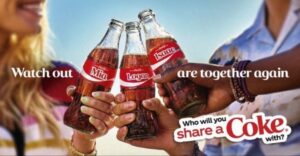
A few years ago, Coke replaced its logo on bottles with names. Not big changes. Not a new flavour. Just names.
And suddenly, people were standing in supermarkets behaving like they were on a treasure hunt.
“Wait, do they have Priya?”
“No, but I found Rahul.”
“Take this one for your sister.”
“Oh my God, they have my name!”
The campaign was called “Share a Coke,” but honestly, it could just as easily have been called “How to Make Millions of People Feel Seen.”
Because the bottle was never really the point.
The feeling was.
The genius of the campaign is that Coke did not change the drink at all. The product stayed exactly the same. But the moment your name appeared on it, it stopped feeling like a bottle and started feeling like yours.
And that tiny shift changed everything.
Suddenly, people were not buying Coke only for themselves. They were buying it for friends, cousins, classmates, office colleagues, crushes and siblings.
The bottle became an excuse to connect.
That is what Coca-Cola understands better than most brands: people do not always remember what they bought. They remember who they shared it with.
And honestly, no other brand could have done this in quite the same way.
Because Coke has never really sold itself as “just a drink.”
It has always sold:
- movie nights
- cricket matches
- birthday parties
- family dinners
- festivals
- that one friend who steals your fries and then asks for a sip of your Coke
The brand already belonged in moments that involved other people. “Share a Coke” simply made that feeling visible.
That is why the campaign worked for everyone.
College students searched for their friends’ names and posted it online. Families looked for the names of their children. Gen Z turned it into Instagram stories. Office groups bought bottles for each other just because it felt fun.
Everyone wanted to be part of it.
And maybe that is because, deep down, all of us want the same thing:
To feel included.
There was also a little bit of luck involved. Finding your own name on a bottle felt weirdly exciting. It was almost like winning something.
And the moment people started posting those bottles online, everyone else wanted to find theirs too.
Not because they needed Coke.
Because they wanted the feeling.
The feeling that somehow, out of millions of people, the brand had noticed them.
That is what made the campaign brilliant.
Coca-Cola never made the drink the centre of the story.
It made the community the centre—and the drink simply came along.
The same thing happened in Coke’s bottle-opener campaign on college campuses. Two people had to come together to open the bottle. One person alone could not do it.
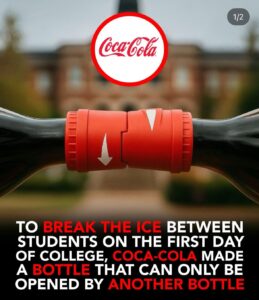
It was such a simple idea, but it said something important:
Coke is more fun when it is shared.
Even the “Friendly Twist” campaign worked on exactly the same principle. Coca-Cola created bottles that could not be opened with one hand. You needed another person to twist the cap in the opposite direction. Suddenly, even opening the bottle became an excuse to talk to someone.
It was such a small change, but it created something bigger: strangers speaking to each other, friends laughing, people helping each other. The bottle itself became a conversation starter.
That is the genius of Coke’s community marketing. The brand keeps finding tiny ways to make people need each other.
Even today, the newer Gen Z version of “Share a Coke” follows the same logic. The names, the online content, the sharing—it all comes back to one thing: making people feel like they are part of something.
And honestly, that is why the campaign still feels so relevant.
Because in a world where everyone is trying to get attention, Coca-Cola chose to give people recognition.
If I were the social media manager for Coca-Cola today, I would take this idea one step further.
Every bottle would come with a QR code. You scan it, upload a photo, and instantly create a tiny digital caricature version of yourself or your friend. Then, for a limited period, you could get that printed on a bottle.
Imagine finding not just your name—but your face.
I would also add reward points every time you bought a Coke for someone else. Not for buying one for yourself. For gifting one.
Because the campaign becomes even more powerful when the bottle feels less like a product and more like a message that says:
“I thought of you.”
That is the real reason Coca-Cola’s community marketing works.
It is not selling sugar, fizz or packaging.
It is selling connection.
And connection is powerful because it does something no discount or offer can do:
It makes people come back.
Marketing Lesson: Community is not separate from sales. Community creates connection, connection creates memory, and memory eventually becomes sales.
This post is a part of BlogchatterA2Z Challenge 2026
This post is part of my BlogChatter A2Z 2026 series: “The A–Z of Brands Winning the Internet.” Through 26 blogs, I’m decoding how the world’s most-talked-about brands use social media, trends, storytelling and clever marketing to stay relevant—from AI and meme marketing to nostalgia, virality and Gen Z culture.Each post explores one brand, one marketing style and one big lesson in modern digital marketing.
Amazing insight
Amazing insight