
KrantiJyoti Vidyalay Marathi Madhyam Review: A Film That Takes You Back to Who You Once Were
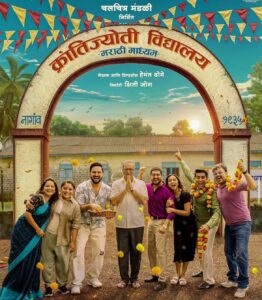
KrantiJyoti Vidyalay Marathi Madhyam is a must-watch Marathi film. It may feel like a one-time watch for some, but if you enjoy revisiting memories, it is also a film you can return to later. Watching it with friends makes the experience richer because the emotions it brings up are shared ones.
I watched this film with my family. My parents, my 88-year-old grandmother, and me. Four age groups, four personalities, and four very different reactions. Yet, all of us stayed connected to the screen. Director Hemant Dhome manages to hold the attention of every generation without forcing emotions or turning the story into a lecture.
Four Generations, Four Ways of Feeling the Same Film
For my mother, who is a working professional, the film felt comforting and light. She laughed, felt nostalgic, and enjoyed it as an entertainer that still carried emotional weight.
For my father, who studied in a Marathi-medium school, the film went much deeper. He understood the intent behind every scene. For him, it was not just a story unfolding on screen but a reflection of his own school years, friendships, and memories.
For my grandmother, the joy came from the simplicity of the film. The playful classroom moments, the warmth of the teachers, the village setting, the trees, the beach, and the overall openness of the world shown. At 88, she loved the film for how free and sweet it felt.
For me, the impact came in layers. The school memories, friendships, and the innocence of relationships formed at that age felt painfully real. More than romantic breakups, it is the slow drifting apart of friendships that stays with you. The film captures that truth quietly, without exaggeration.
What the Film Is Really Saying About Language and Identity
One question that kept coming up when I discussed this film was whether the characters or even the makers would choose Marathi-medium schooling for their own children.
The film never claims that Marathi-medium schools are superior or that English education is wrong. What it says is far more important. Learning in your mother tongue should not come with shame.
Until a child understands emotions, thoughts, and identity in the language they are most comfortable with, self-expression always feels incomplete. Practical skills can be added later. Understanding yourself comes first. That thought forms the emotional backbone of this film.
Characters That Felt Like Real People
Anjali, played by Prajakta Koli, feels like someone we all knew in school. She has moved ahead in life and built a career, yet she carries unfinished emotions. Her character represents how growth does not automatically mean closure but also how eventually we accept and cherish life.
Suman, played by Kadambari Kadam, represents quiet strength. She knows the choices she has made and stands by them without regret. Her emotional stability feels grounded and honest.
Vishal, played by Pushkaraj Chirputkar, is emotionally beautiful. Beyond friendship, his character portrays the inner volatility of a man trying to balance childhood sentiments, work, career ambitions, personal motives, and the constant need to be present for others. His struggle feels deeply relatable.
Rakesh, played by Harish Dudhade, beautifully complements Vishal. Their friendship shows how maturity disappears the moment childhood memories resurface. The scene where they go to meet their childhood bread patties seller, whom they lovingly call Kaka, is deeply moving. Seeing someone from your childhood still alive feels like proof that a part of your past still exists. This moment connected deeply with my father.
Dinkar Shirke Sir, played by Sachin Khedekar, is the teacher most of us remember for life. He sees students beyond marks and results. Though he teaches English, he strongly believes in preserving Marathi-medium education. His character shows that belief does not need aggression to make an impact.
Baban, played by Amey Wagh, adds emotional depth through humour. He is the friend everyone enjoys being around, the one who makes people laugh. Behind that humour is vulnerability and emotional weight that he never openly shows. His performance brings honesty to the character.
Salma, played by Kshitee Jog, represents childhood wounds that stay silent but never truly disappear. Her portrayal is sincere, though her character could have been explored more toward the end.
Deep, played by Siddharth Chandekar, represents a generation that appears confident outwardly but still seeks validation. His character feels relevant even when underused.
The Trio That Defines Friendship
One of the most beautiful aspects of the film is the childhood trio of Anju, Baban, and Deep.
Their friendship is built on sarcasm, inside jokes, shared memories, and a language only they understand. Over the years, life happens. Careers grow, priorities shift, and distance forms. Yet, one of them still tries to choose friendship every time and ends up getting hurt.
When they come together again, despite the changes and emotional gaps, the old vibe returns instantly. Their laughter feels familiar. Their bond feels untouched at its core. The film portrays how some friendships evolve, some fracture, but the real ones never truly disappear. That moment when they reconnect makes it clear that this friendship is for life.
The Soul of the Film
The true soul of KrantiJyoti Vidyalay Marathi Madhyam lies in its climax. The monologue and dialogues hold the audience’s attention completely. Not a second feels wasted. The writing and performance work together to create an exhilarating moment where everything finally comes together.
The nostalgia, friendships, school incidents, and past baggage add emotional richness, but they remain secondary. The climax reminds you why this story needed to be told.
Final Thoughts
Hemant Dhome handles this film with sensitivity and clarity. He allows moments to breathe and trusts the audience to feel rather than be told what to feel.
This is a film I would recommend to anyone. Watch it with friends. Watch it with your partner. Watch it with family. I watched it with people in their fifties, sixties, and eighties, and each of them took something personal back with them.
Some films entertain.
Some films make you think.
This one quietly takes you back to school, to friendships, and to the parts of yourself you thought you had left behind.