
Brand Type of the Day: Buzz / Real-Time Marketing
Buzz marketing is when a brand becomes part of the conversation everyone is already having. Real-time marketing is when the brand gets there before everyone else.
The fastest thing about Blinkit is not its delivery.
It is how quickly it makes you feel left out if you did not order.
Because somehow, every time the internet is obsessed with something, Blinkit has already made a bag for it.

Christmas? There was a delivery bag that turned into a Christmas tree.
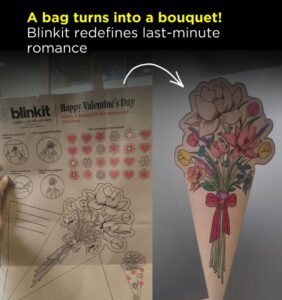
Valentine’s Day? Blinkit had a special bag for that too.
Summer? Suddenly, the delivery bag folded into a fan.
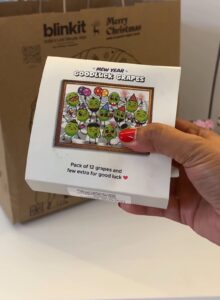
New Year’s Eve and the viral “eat 12 grapes under the table” trend? Blinkit was already delivering a grape box before the rest of us had even found twelve grapes in the house.
At this point, I am convinced Blinkit has a crystal ball and a graphic designer permanently living inside it.
The genius of these bags is that they are doing something most brands still do not understand:
They are turning packaging into the campaign.
Because nobody is really posting the delivery bag online because they care about the bag.
They are posting it because the bag makes them feel like they got the “special edition” version of the moment.
The internet is built on one very powerful emotion:
“Wait. Everyone else has this. Why don’t I?”
And Blinkit has mastered that feeling.
It is not just delivering groceries in 10 minutes.
It is delivering FOMO in 10 minutes.
That is why these bags work so well. They take something completely ordinary, a grocery delivery and make it feel like an event.
You order chips and toothpaste.
You receive a Christmas craft project.
You wanted cold coffee.
You got a tiny piece of the internet.
And suddenly, you are posting it on Instagram stories with the caption:
“Why is Blinkit doing this better than everyone else?”
The smartest part is that Blinkit does not stop at the delivery bag.
The app itself changes too.
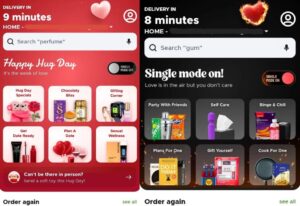
Every festival, every occasion, every internet trend somehow appears on the Blinkit home page before you even realise you need it.
During summer, the app suddenly becomes full of cooling essentials. During Valentine’s week, there are categories for flowers, chocolates and “last-minute panic.” During exam season, it becomes stationery, highlighters and snacks that look suspiciously like procrastination.
Even the categories feel like marketing.
And honestly? That is because they are.
Most brands think marketing is the ad.
Blinkit understands that marketing is the entire experience.
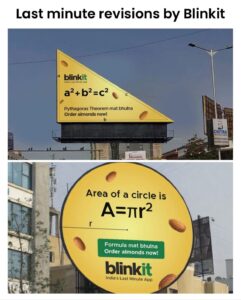
That is why its exam-season billboards worked so well too. Instead of directly saying “buy stationery from Blinkit,” the billboards used formulas and classroom references that instantly made students stop and look.
You did not feel like you were being sold something.
You felt seen.
That is Blinkit’s real superpower.
The brand never says:
“Here is our product.”
It says:
“We know exactly what is happening in your life right now.”
And that is why people keep sharing it.
Not because they care about delivery bags.
Because they care about being part of the moment.
The Christmas tree bag was not just a bag. It reminded people of those school days when teachers made us cut, fold and decorate paper stars five minutes before the Christmas party.
The Raksha Bandhan bag did the same thing. The Valentine’s bag did too.
There is something oddly nostalgic about them.
In a world where everything is fast, digital and forgettable, Blinkit somehow manages to make people pause for two minutes and turn a grocery bag into arts and crafts.
Which is honestly not what I expected from an app that delivers onions.
If I were the social media manager for Blinkit, I would take this one step further.
Every special Blinkit bag would come with a printed number and become part of a year-long contest. Customers could post what they created with the bag, tag Blinkit and enter to win a monthly voucher.
Suddenly, the bag is not just packaging.
It is a ticket.
I would also take Blinkit into college festivals and campus events with mini game booths. If a brand like Lay’s collaborated with Blinkit, people could play a quick game using the products and win hampers. One quick challenge. One small reward. One more reason to post it online.
Because Blinkit’s next step is not just making people notice the campaign.
It is making people participate in it.
And that is the reason Blinkit feels different from every other delivery app.
Most brands are trying to keep up with the internet.
Blinkit is trying to arrive before it.
Marketing Lesson: The best marketing does not make people feel like customers. It makes them feel like they were part of the story all along.
This post is a part of BlogchatterA2Z Challenge 2026
This post is part of my BlogChatter A2Z 2026 series: “The A–Z of Brands Winning the Internet.” Through 26 blogs, I’m decoding how the world’s most-talked-about brands use social media, trends, storytelling and clever marketing to stay relevant—from AI and meme marketing to nostalgia, virality and Gen Z culture.Each post explores one brand, one marketing style and one big lesson in modern digital marketing.