
Brand Type of the Day: AI Marketing
AI marketing is when brands use artificial intelligence to make content more personal, imaginative and impossible-to-ignore. The smartest brands are not using AI to replace creativity. They are using it to make creativity visible.
The internet has now seen everything.
AI-generated babies. AI influencers. AI wedding photos. AI people turning themselves into Studio Ghibli characters.
But I did not expect to wake up one day and find the Amul girl casually walking around New York.
And yet, there she was.
Recently, Amul used AI-generated reels to show its iconic mascot travelling through America and Spain as part of the brand’s global expansion.
Now technically, nothing huge happened.
She did not save the world. She did not break into a dance. She literally just walked.
But somehow, that tiny moment felt magical.
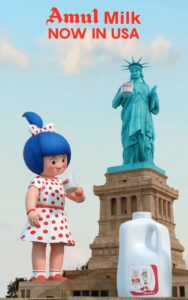
Because for years, we have only known one version of the Amul girl: half visible, standing on a billboard, making a sarcastic comment about whatever chaos the country is currently going through.
Then suddenly, she had legs.
And honestly? That was enough.
The reason this reel worked is because it gave us something we did not know we wanted: a childhood memory entering the real world.
Most brands use AI like that one person who has just discovered the latest filter and will not stop. Everything becomes too shiny, too dramatic, too obviously AI.
“Look! We made a lion out of coffee beans!”
“Look! Our product is floating in space!”
“Look! Absolutely no human emotions whatsoever!”
Five seconds later, you forget the ad and continue scrolling.
But Amul did something different.
Instead of creating a brand-new world, it took something we already loved and made it come alive.
That is the difference between using AI for attention and using AI for imagination.
The Amul girl is already one of the most memorable brand mascots in India. She has spent decades reacting to cricket matches, politics, films and viral moments with the kind of wit that most brands would sell their entire marketing budget for.
So when Amul wanted to announce that it was entering the US and Spain, it could have made a corporate video with dramatic music and words like “global journey” and “new beginnings.”

Thankfully, it did not.
Instead, it sent the Amul girl there.
Because no one remembers “we are pleased to announce…”
People remember characters.
People remember feelings.
And the moment I saw the Amul girl standing in another country, I had exactly one thought:
Why does this feel like seeing an old school friend at the airport?
That is what great marketing does. It takes a business update and turns it into an emotion.
Also, let us be honest: half the fun was simply because we have only ever seen the upper half of the Amul girl.
We know her face. We know the bow. We know the expression.
But we have never seen the rest of her.
The internet collectively reacted the same way:
Wait. She walks?
And suddenly, everyone was interested.
It is the same reason “food melodrama” reels are working so well right now. A samosa acts betrayed. A bowl of Maggi behaves like the heroine of a breakup scene. A cookie looks like it has unresolved childhood trauma.
Ridiculous? Yes.
Am I watching every single one? Also yes.
Because AI is doing something very interesting to brand content. It is giving personality to things that do not have one.

Recently, Britannia created an AI world where biscuits became giant landmarks and cities. Bourbon was suddenly architecture. Jim Jam looked like real estate.
Should I have cared this much about biscuits? Probably not.
Did I? Absolutely.
Because AI is helping brands do what they have always wanted to do: make us step inside their imagination.
The creativity was always there.
AI just gave it a body.
That is why I think the best AI campaigns are not the ones shouting, “Look what AI can do!”
They are the ones quietly asking:
“What if we made this idea feel real?”
And that is exactly why this worked for Amul.
This is a brand that already knows how to turn culture into content. Just recently, its collaboration with Zepto sent customers empty butter boxes during Janmashtami with a note saying Krishna had already stolen the butter.
Whoever came up with that deserves both a promotion and a nap.

Then there was the recent Dhurandhar topical ad, where Amul once again did what it does best: take something everyone is talking about and make it funnier.
The medium keeps changing.
The Amul personality does not.
Earlier, the Amul girl lived on hoardings.
Now she lives in reels.
And if I were the social media manager for Amul, I would take it one step further.
I would make AI-powered video billboards.
Imagine the classic Amul ad. Same illustration. Same polka dots. Same toast.
Then suddenly, the Amul girl blinks, says one line about the latest trend, rolls her eyes dramatically and freezes back into the poster.
Tell me you would not share that immediately.
Marketing Lesson: AI is not here to steal our jobs. It is here to work like an intern. We are still the creative directors. AI just helps our weirdest, funniest and most impossible ideas finally leave the group chat.
This post is a part of BlogchatterA2Z Challenge 2026
This post is part of my BlogChatter A2Z 2026 series: “The A–Z of Brands Winning the Internet.” Through 26 blogs, I’m decoding how the world’s most-talked-about brands use social media, trends, storytelling and clever marketing to stay relevant—from AI and meme marketing to nostalgia, virality and Gen Z culture.Each post explores one brand, one marketing style and one big lesson in modern digital marketing.