
G for Guerrilla: Why the Best Ads Don’t Look Like Ads Anymore
Brand Type of the Day: Guerrilla Marketing
Guerrilla marketing is when a brand stops using the world as a place to advertise and starts turning the world itself into the advertisement.
The smartest ads today are not on billboards.
They are on benches, bus stops, elevators, roads, metro handles and sometimes, even in the middle of your messiest life.
Because the best guerrilla marketing does not interrupt your day.
It sneaks into it.
A bus stop seat folds exactly like a phone.
An elevator becomes an Oreo dipped in milk.
A streetlight turns into a cup of coffee being stirred.
A pile of dirty utensils suddenly appears in the middle of a mall and every adult walking past quietly whispers:
“This is literally my house.”
That is what makes guerrilla marketing so clever.
It does not shout.
It surprises.
And in that one second of surprise, the brand becomes unforgettable.
One of the smartest examples I saw recently was by Urban Company.
Instead of making a normal ad saying “We clean your house,” the brand placed giant piles of dirty clothes and utensils in public spaces.
No long copy.
No emotional background music.
Just one painfully relatable image.
And suddenly, everyone passing by felt exposed.
Because we all try to hide the mess.
The clothes that have been sitting on the chair for three days. The utensils that have somehow become part of the kitchen decoration. The pile of laundry we keep pretending we will fold tomorrow.
Urban Company did something interesting.
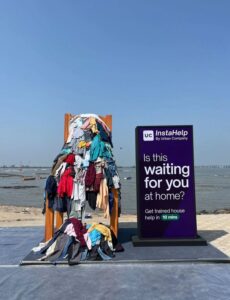
It took that hidden chaos and put it in public.
Not to shame people.
To normalise it.
And in doing that, the brand quietly said:
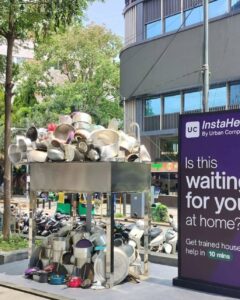
“You are not lazy. You are just tired. We can help.”
That is the power of guerrilla marketing.
It makes people feel seen before it tries to sell anything.
But the most interesting thing is that there is not just one kind of guerrilla marketing.
Some brands use the environment to become the product.
Like Oreo, which turned an elevator into an Oreo being dipped into milk.
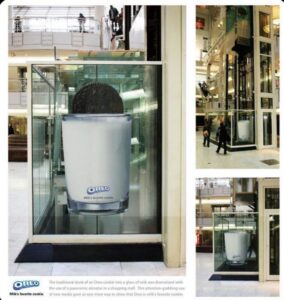
As the lift moved down, the cookie slowly disappeared into the “milk.”
No one needed to explain the ad.
You saw it and instantly got it.
The same thing happened when Samsung created a folding bus stop seat that opened and closed exactly like its foldable phone.
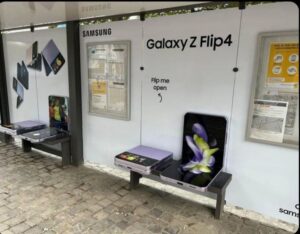
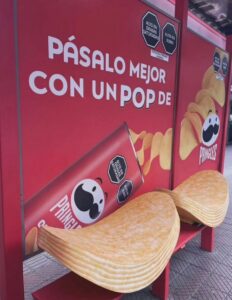
Or when Pringles created a bench shaped like a giant chip.
Or when McDonald’s used zebra crossings as fries and streetlights as coffee stirrers.
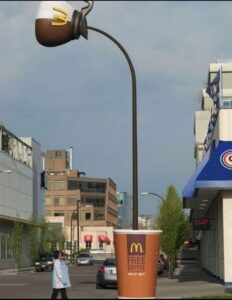
The world itself became the billboard.
And somehow, those are the ads we remember most.
Because guerrilla marketing works best when the product is not separate from the idea.
The idea becomes the product.
That is also why experience-based guerrilla marketing works so well.
Sprite once created a public shower installation that people could stand under on a hot day.
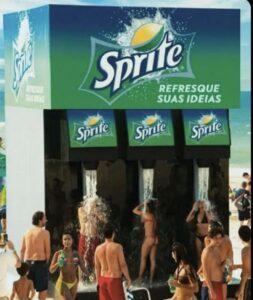
It was refreshing, funny and impossible not to photograph.
Indian Idol turned metro handles into microphones, making every passenger feel like they were about to perform.
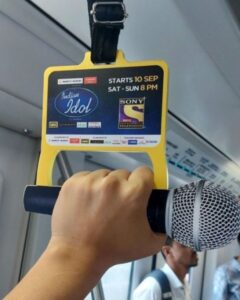
The audience stopped being viewers.
They became part of the campaign.
And that is the real secret behind guerrilla marketing.
It does not make people look at an ad.
It makes them enter it.
Which is why people photograph these campaigns, send them to their friends, post them on Instagram and say:
“This is so clever.”
The brand no longer needs to do all the talking.
People do it for them.
If I were sitting in the boardroom creating a guerrilla campaign, I think I would make one for KitKat.
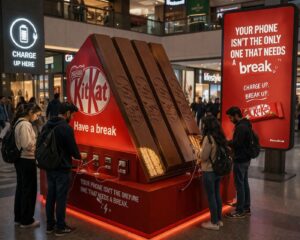
I would turn charging stations in malls and colleges into giant KitKat bars.
Because people are already standing there, tired, waiting for their phone to charge.
The line would simply say:
“Your phone isn’t the only one that needs a break.”
And suddenly, the slogan becomes real.
I would also make one for Maggi.
At a seaface or sunset point, I would place a giant empty Maggi bowl in exactly the right spot so that, every evening, the setting sun falls perfectly inside it like an egg yolk over noodles.
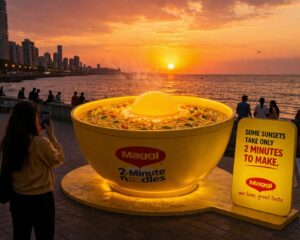
Beside it, just one line:
“Some sunsets take only 2 minutes to make.”
And for Blinkit, I would create a glowing school bag installation that appears only after 10 PM outside apartment buildings and stationery stores.
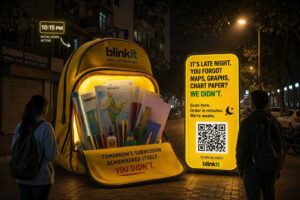
The bag would be open, with chart paper, maps, graph paper and glitter pens spilling out.
And beside it:
“Tomorrow’s submission remembered itself. You didn’t.”
Then a QR code.
Because every student and every parent has had that exact 10 PM panic moment.
That is what great guerrilla marketing does.
It finds the small things we all secretly experience, and then turns them into something we cannot ignore.
Marketing Lesson: The best ads do not feel like advertisements. They feel like moments we want to stop, notice and remember.
This post is a part of BlogchatterA2Z Challenge 2026
This post is part of my BlogChatter A2Z 2026 series: “The A–Z of Brands Winning the Internet.” Through 26 blogs, I’m decoding how the world’s most-talked-about brands use social media, trends, storytelling and clever marketing to stay relevant—from AI and meme marketing to nostalgia, virality and Gen Z culture.Each post explores one brand, one marketing style and one big lesson in modern digital marketing.