
Happily Ever and Never Afters
– A Moving Portrait of Women, Love, Loss and Strength
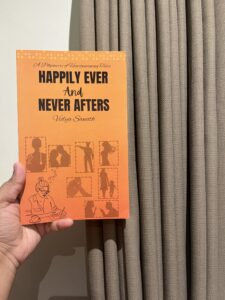
There are some books that entertain, and then there are books that quietly sit with you long after you have turned the final page. Happily Ever and Never Afters by Vidya Sanath belongs firmly to the second category.
At first glance, the title made me expect a blend of cheerful stories and bittersweet ones. But what unfolded was far more profound: sixteen stories, sixteen women, and sixteen lives stitched together by pain, hope, resilience and longing. Each woman inhabits a different world, yet every story feels achingly familiar because, in one way or another, these are the lives we witness around us every day.
What makes this collection remarkable is the way it transforms ordinary lives into unforgettable stories. These are not women placed on a pedestal. They are mothers, daughters, wives, widows, caregivers and ambitious women trying to hold together careers, relationships and expectations. Through them, the author explores motherhood, marriage, widowhood, family, financial struggles, loneliness, love and identity with extraordinary sensitivity.
The writing is simple yet deeply evocative. Every story begins almost gently, drawing you into the characters’ world, before building towards a moment of revelation that leaves you stunned, emotional or reflective. The stories are short, but they never feel incomplete. Even if you open the book at random and read just one story, it still leaves behind an impact.
One of the most gripping stories in the collection is “The Echoes of the Wind Chime”. It opens with an air of mystery and suspense, carrying almost the atmosphere of a murder mystery. There is a constant feeling that something is waiting to be uncovered, and that tension makes the story impossible to put down.
Equally memorable is “Sorry I Touched Her”, a story that examines widowhood with heartbreaking honesty. Through it, Vidya Sanath captures the invisible loneliness of widowed women and the way society often changes its behaviour towards them. It is quiet, painful and deeply thought-provoking.
Among all the stories, “The Dancer” was one of my absolute favourites. Beautifully layered and emotionally rich, it explores the conflict between personal dreams and professional ambition. The story talks about parenthood, love and the difficult decisions women are often forced to make. What makes it especially relevant is the inclusion of modern conversations around fertility and egg freezing. These are subjects that are still considered uncomfortable in many households, yet the story presents them with such empathy and normalcy that it feels refreshing.
“Living a Lie” is another story that lingers in the mind. It follows the intertwined lives of a mother and daughter, showing how two women can travel completely different paths and yet arrive at the same emotional destination. There is something haunting about the way their lives mirror one another, and it makes the story one of the most unforgettable in the book.
Then comes “The Rebirth”, perhaps one of the most emotionally devastating stories in the collection. It delves into motherhood, grief and the unbearable pain of losing a child. Yet, beneath all the heartbreak, it is also a story about healing and the quiet strength that comes from having a loving, supportive partner. The emotions in this story are raw and deeply human, written with extraordinary tenderness.
What I admired most about this collection is that it does not only celebrate young women or women in the so-called “best years” of their lives. Stories like “The Jar of Happiness” and “The Acceptance” give voice to older women, widows and women who are often pushed to the margins. Through these stories, the author captures the delicate relationship between younger and older generations, the burden and beauty of caring for elders, and the fading yet precious warmth of Indian family values. There is a quiet dignity in these stories that makes them incredibly moving.
“The Justification” is another standout because of the way it redefines the idea of a stepmother. Instead of relying on the familiar stereotype, the story portrays a relationship built on tenderness, trust and acceptance. It reminds us that sometimes the word “step” is not a barrier, but the beginning of a bond.
And then there is “The Second Suitcase”, one of the most powerful stories in the collection. Through it, the author boldly questions the way Indian society views daughters after marriage. The story challenges deeply rooted beliefs about belonging, responsibility and the idea that a daughter’s place changes once she leaves home. It is written with such honesty and grace that it leaves you both emotional and introspective.
The true brilliance of Happily Ever and Never Afters lies in the fact that it refuses to offer fairy-tale endings alone. Some women in these stories find their happily ever after, while others are left with heartbreak, compromise or unanswered questions. Yet every story matters. Every woman matters.
This is not merely a collection of short stories. It is a mirror held up to society and to the countless emotions women carry silently within themselves. Tender, heartbreaking, empowering and deeply relatable, this is a book that will make you pause, reflect and perhaps see the women around you a little differently.
If you enjoy emotional short story collections, women-centric fiction, and books that explore family, motherhood, marriage and identity with honesty and warmth, then Happily Ever and Never Afters deserves a place on your bookshelf.
Buy the book here❤️ – https://amzn.to/48c5l0a