
Brand Type of the Day: Purpose-Driven Marketing
Purpose-driven marketing is when a brand goes beyond selling a product and actually solves a real problem, acknowledges a customer pain point or makes people feel understood.
Most pizza brands talk about extra cheese.
Domino’s talked about potholes.
And somehow, that is exactly why people remembered it.
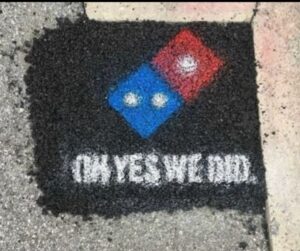
A few years ago, Domino’s launched its “Paving for Pizza” campaign. Instead of making another ad about hot pizza arriving in 30 minutes, the brand decided to fix roads.
Yes. Actual roads.
Because Domino’s realised something very simple: potholes ruin pizza.
They make the delivery ride uncomfortable. They shake the box. They make the pizza slide around. They frustrate delivery boys and customers before the food even arrives.
So Domino’s did something most brands never do.
It acknowledged the problem.
The company began helping repair potholes in cities and put up signs explaining that the road had been fixed so pizza could arrive safely.
On paper, it sounds ridiculous.
Why is a pizza brand fixing roads?
But that is exactly why the campaign worked.
Because it did not feel like Domino’s was trying to advertise itself.
It felt like the brand was trying to understand people.
That is the thing about Domino’s. The brand often works best when it stops talking about pizza and starts talking about the people who eat it.
The potholes campaign was not really about roads.
It was about making customers and delivery riders feel seen.
And that made Domino’s feel more human than a hundred emotional ads ever could.
The same thing happened when Domino’s openly admitted that people did not like its pizza.
Years ago, the brand released ads showing real customer comments:
“The crust tastes like cardboard.”
“The pizza is terrible.”
“The sauce has no flavour.”
Most brands would have hidden those comments.
Domino’s put them in the ad.
It looked directly at customers and said:
“You are right. We heard you. We are fixing it.”
Then the company changed the recipe.
And strangely enough, customers trusted the brand even more.
Because people do not need brands to be perfect.
They need brands to be honest.
Domino’s did not build trust by pretending it had no flaws.
It built trust by admitting the flaws and doing something about them.
That is why even Domino’s funnier campaigns feel different.
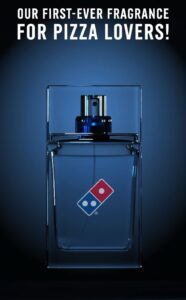
Recently, Domino’s UAE posted an April Fool’s campaign for a pizza perfume—a perfume bottle that smelled exactly like pizza.
Completely ridiculous.
And yet, people loved it.
Because the joke worked only because it came from a very real customer truth:
People love pizza so much, they would probably wear it if they could.
Some people even commented that if they could not eat junk food every day, they would at least like to smell like pizza.
Which is absurd.
But also strangely believable.
And that is what Domino’s understands so well. The brand notices the small things people secretly think, joke about or struggle with—and turns them into campaigns.
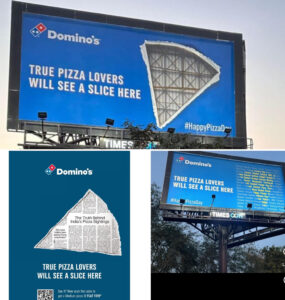
Even Domino’s recent triangle billboard campaign proves this.
The billboard is almost empty. There is only a triangle-shaped cut in the middle and a line that says:
“Pizza lovers will see a pizza here.”
And somehow, they do.
Because Domino’s is not just teaching people to remember the brand.
It is teaching them to see pizza everywhere.
The brand has reached a point where a triangle itself feels like Domino’s.
That is not just advertising.
That is brand memory.
And what makes Domino’s interesting is that none of this feels fake or overdone.
The affordable combos make people feel considered. The better packaging and redesign make the experience easier. The way the brand talks about delivery riders makes them feel acknowledged.
The potholes campaign acknowledged delivery boys.
The recipe campaign acknowledged disappointed customers.
The triangle campaign acknowledged true pizza lovers.
The perfume campaign acknowledged the weird little things people secretly feel.
Domino’s never really sells pizza.
It sells the feeling that someone understands you.
If I were the social media manager for Domino’s, I would take this idea even further.
I would create campus activations where students have to work together to form giant pizzas using oversized slices. The first team to create the correct pizza shape wins.
Because pizza is not really fun alone.
I would also collaborate with PVR Cinemas and INOX to create giant triangle-shaped single-slice pizza boxes inspired by different movies. Every box would have a famous dialogue printed on it.
Because if there is one thing Domino’s knows how to do, it is turn something ordinary into something people want to talk about.
Marketing Lesson: When brands acknowledge the pain points of customers, customers start acknowledging the brand.
This post is a part of BlogchatterA2Z Challenge 2026
This post is part of my BlogChatter A2Z 2026 series: “The A–Z of Brands Winning the Internet.” Through 26 blogs, I’m decoding how the world’s most-talked-about brands use social media, trends, storytelling and clever marketing to stay relevant—from AI and meme marketing to nostalgia, virality and Gen Z culture.Each post explores one brand, one marketing style and one big lesson in modern digital marketing.
Such a sharp, engaging take. You’ve captured it perfectly—when a brand listens before it speaks, people naturally listen back. Domino’s didn’t just market pizza, it built connection. Simple insight, powerful impact.
I remember this campaign from my childhood days. What a brand you found.