
If you like emotionally heavy literary fiction that leaves you silent afterwards, this is for you.
Am I A Dalit?
Author : Vijhay Sundar K.G
Book Reviewed By - Sameeksha Manerkar
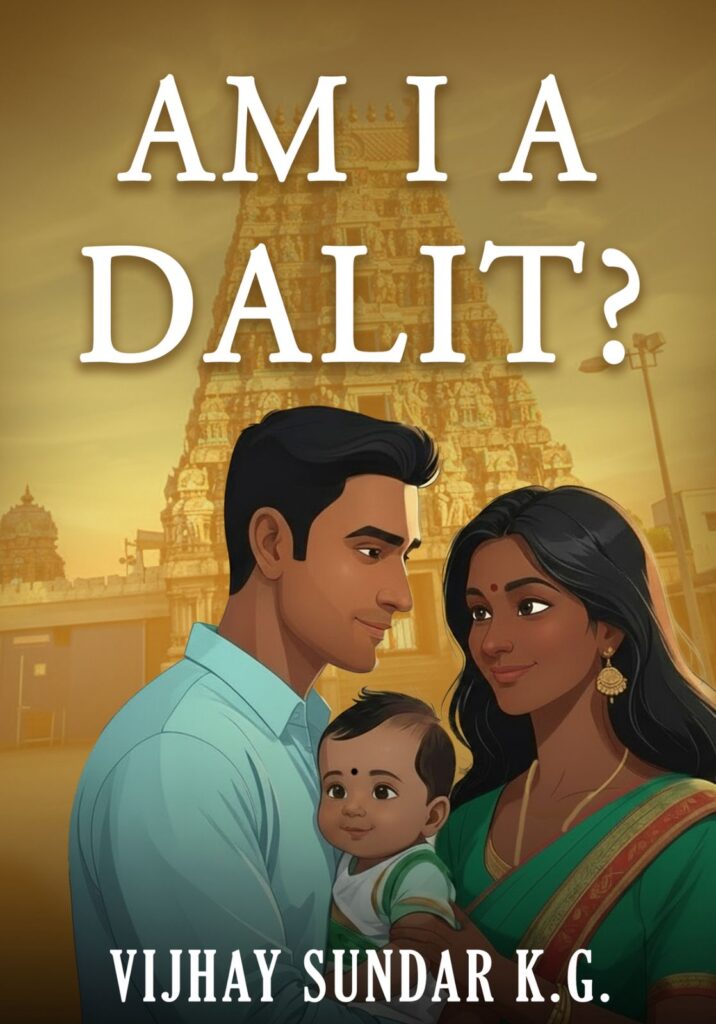
Am I A Dalit? Book Review: A Brutal, Thought-Provoking Exploration of Caste, Identity, Trauma, and Society
Some books entertain you for a few hours.
Some books emotionally affect you for days.
And then there are books like Am I A Dalit? — books that shake you from the core, disturb your understanding of society, and force you to confront realities most people prefer to ignore.
This was not an easy read emotionally.
It was intense, painful, thought-provoking, and deeply unsettling in ways that stayed with me long after I finished reading. From casteism, untouchability, religion, identity, generational trauma, honor killing, terrorism, and social conditioning to the psychological burden of inherited shame, this book explores some of the darkest realities embedded within society.
What impacted me most was how brutally honest the narrative felt.
Nothing here feels softened for comfort.
A Story That Begins With Humanity Against Orthodoxy
The story begins when Vikash finds Arundhati, a stranded woman in torn clothes carrying a small child while desperately trying to survive. Instead of seeing her through the lens of caste, society, or purity, Vikash simply sees a vulnerable human being who needs care, shelter, and dignity.
He brings Arundhati and her child home despite knowing how his orthodox family might react.
The next morning becomes the beginning of the novel’s emotional and ideological conflict.
The moment Vikash’s parents realize that Arundhati belongs to a lower caste, they immediately demand that she leave the house. What follows is not just a family disagreement but a horrifying reflection of deeply rooted caste mentality, social conditioning, and inherited prejudice.
The book powerfully depicts how humanity itself becomes rebellion inside a casteist society.
Even when Vikash tries to reason with his parents and challenge their rigid beliefs, they remain trapped inside their obsession with caste purity and societal shame. The situation escalates so tragically that his parents eventually take their own lives because they cannot accept their son living with a Dalit woman.
And this is where the novel becomes even more layered.
The Ghost of Caste Follows Across Borders
After leaving India and moving to suburban America, Vikash and Arundhati attempt to rebuild their lives. But the novel brilliantly shows that geography cannot erase inherited trauma or social conditioning.
Caste follows them like a shadow.
Their son Shiva grows up physically distant from India but emotionally trapped inside the weight of a history he never chose. As he enters his teenage years and slowly learns about his family’s past, Dalit identity, caste hierarchy, violence against Dalits, and the brutal realities attached to caste oppression, his understanding of himself begins collapsing.
One of the most powerful parts of the book is Shiva’s psychological conflict surrounding identity and existence.
There is a deeply haunting sequence where Shiva confronts himself in front of a mirror while trying to process:
- who he is,
- what caste means,
- how society views Dalits,
- and what it means to inherit generations of pain, humiliation, and discrimination.
The mirror almost becomes symbolic of accusation, shame, and fractured identity.
The novel raises devastating questions:
- Can someone ever truly escape a system they were born into?
- Does society see a person as human first or caste first?
- Can inherited trauma ever fully disappear?
Shiva: The Psychological Weight of Inherited Identity
Among all the characters, Shiva’s journey felt the most psychologically devastating.
Unlike Vikash and Arundhati, Shiva grows up in suburban America — physically distant from India yet emotionally trapped inside its history. When he slowly discovers the truth about caste, Dalit identity, violence, social hierarchy, and his own family’s past, his understanding of himself begins collapsing piece by piece.
What makes Shiva such a powerful character is that he represents a generation trying to intellectually process inherited trauma while emotionally drowning beneath it.
The novel repeatedly portrays Shiva as someone who questions everything:
- religion,
- morality,
- society,
- identity,
- existence,
- and even humanity itself.
One of the most haunting lines in the novel says:
“The truth was a monster, and now it’s laughing in my head.”
That line perfectly captures Shiva’s emotional unraveling.
The more he learns about casteism and the brutality surrounding Dalit existence, the more isolated he becomes from the world around him. His inner conflict is not just about belonging but about understanding whether society can ever truly move beyond systems built on humiliation and inherited hierarchy.
Another passage that deeply stayed with me was:
“Since childhood, Shiva had a deep love for reading and questioning, which only intensified when he discovered the harsh reality of casteism.”
And that is exactly what makes Shiva such an impactful character.
He does not passively accept the world around him. He questions it relentlessly, even when those questions emotionally destroy him.
Through Shiva, the book explores:
- generational trauma,
- emotional isolation,
- inherited shame,
- existential confusion,
- and the psychological burden of understanding too much about society’s cruelty.
His character feels less like a fictional figure and more like a reflection of what happens when truth arrives too violently.
Arundhati: The Emotional Soul of the Novel
Among all the characters, Arundhati’s journey was one of the most heartbreaking.
She begins as a helpless woman trying to protect her child, but even after receiving safety, love, and shelter, she continues carrying the psychological burden of caste oppression inside herself.
That was one of the most painful aspects of her character.
She constantly feels:
- undeserving of love,
- undeserving of care,
- and almost guilty for existing.
She sees herself as a bad omen who destroys lives.
The novel beautifully and painfully portrays how oppression does not only exist socially — it eventually lives inside the mind.
Even after marrying Vikash, Arundhati repeatedly behaves as though she is still a servant or slave trying to earn dignity through obedience, sacrifice, and silence. Whether it is learning English, becoming a “good wife,” praying religiously, taking care of the household, or simply wanting to give her husband children, her entire existence is shaped by survival conditioning and inherited fear.
And when the book slowly reveals her childhood trauma and past experiences, it genuinely shakes you emotionally.
By the final chapters, Arundhati’s portrayal becomes incredibly powerful and unforgettable.
One of the most disturbing and emotionally haunting passages in the novel comes during the ending chapter.
The imagery is catastrophic, grief-stricken, and psychologically terrifying. It captures how trauma, loss, caste, guilt, and emotional collapse consume the characters completely by the end of the novel.
Those final chapters genuinely left me speechless.
Vikash: The Moral Center of the Story
Vikash is undoubtedly the philosophical soul of this novel.
He is flawed, emotionally reactive, and sometimes rude or angry, but what makes him compelling is his refusal to see people through caste hierarchy.
Where society sees impurity or shame, Vikash sees humanity.
For him, Arundhati is not a beggar or a lower-caste woman. She is simply someone deserving dignity, compassion, and care. He accepts and loves her child as his own and spends his entire life trying to challenge the brutal mentality surrounding casteism and social discrimination.
What makes his character realistic is that the author does not portray him as a perfect savior. He is deeply human, deeply emotional, and constantly trying to understand the people around him — whether it is his wife, his isolated son, or even marginalized people society judges differently.
Through Vikash, the novel repeatedly questions:
- religion,
- caste structures,
- social hypocrisy,
- inherited prejudice,
- and the moral failure of society itself.
Layered Characters and Social Reality
Another aspect I appreciated was how layered the supporting characters felt.
Characters like Daniela, Shiva’s relationships, the helpers in India, and several side characters all contribute to broader discussions surrounding:
- identity,
- prejudice,
- social perception,
- morality,
- trauma,
- and belonging.
The novel never feels one-dimensional despite its strong anti-caste core.
Instead, it uses flawed and emotionally complex characters to explore how society functions through different lenses and biases.
What makes the book emotionally difficult at times is how fearlessly it discusses disturbing realities including:
- rape,
- terrorism,
- honor killing,
- caste violence,
- and emotional exploitation.
But these themes never feel included merely for shock value. They are woven into the narrative to reflect the uncomfortable truths society often refuses to confront honestly.
Passages That Felt Like Burns of Reality
What makes Am I A Dalit? even more impactful is its deeply reflective and philosophical writing style.
Several passages in this book genuinely felt like emotional burns of reality because they captured society, power, trauma, and identity with brutal honesty.
One of the most powerful lines in the novel says:
“Power, it seemed, wasn’t a crown but a cage—one that bred fear instead of empathy, demanded respect instead of love, and thrived on the constant gnaw of anxiety.”
That single passage perfectly summarizes how authority, caste, and social hierarchy operate throughout the novel — not through compassion, but through fear and control.
Another passage that stayed with me deeply was:
“Casteism might have been invisible in society, but it was fixed in the minds of the people.”
The novel repeatedly argues that caste is not merely a social structure but a psychological conditioning deeply embedded into human behavior and collective thinking.
Another emotionally overwhelming line says:
“Today’s children began to bury their most profound emotions, knowing that one day these suppressed feelings would explode…”
That line felt frighteningly relevant to modern society and emotional repression itself.
Even the darker, almost horrifying passages surrounding Shiva and Arundhati feel emotionally symbolic rather than merely shocking. The final sections of the novel descend into grief, fear, insanity, existential terror, and emotional collapse in ways that leave a lasting impact.
And perhaps that is what makes this book so difficult to forget.
It does not simply tell a story.
It forces readers to emotionally confront uncomfortable realities society continues to normalize.
Writing Style and Narrative Execution
The writing style is emotionally intense yet balanced.
Despite dealing with extremely heavy themes, the author maintains control over the narrative without making it feel emotionally manipulative. The storytelling feels conviction-driven, socially conscious, and psychologically layered.
The characters are flawed, realistic, and morally complex, which makes the emotional impact stronger.
There were a few moments where the pacing felt slightly slow, but the author’s perspective, thematic depth, and commitment to exploring social realities kept me invested throughout.
This is not a fast-paced comfort read.
It is a reflective, emotionally exhausting, and socially confronting novel that demands emotional attention from the reader.
Final Thoughts
Am I A Dalit? is not just a book about casteism.
It is a book about inherited pain, identity, humanity, social conditioning, generational trauma, and the psychological scars created by systems society continues to normalize.
What stayed with me most was the realization that casteism in this book is not shown merely as discrimination. It is shown as emotional damage passed through generations, capable of destroying identities, relationships, families, and even self-worth.
This book disturbed me, moved me, and genuinely changed the way I look at society and reality.
It is painful.
It is uncomfortable.
And that is exactly why it feels important.
If you are looking for a socially layered, emotionally devastating, and thought-provoking literary read that forces you to question the realities around you, Am I A Dalit? is a book worth experiencing.