
Your 10-Minute Delivery Obsession Has a Wild Backstory
Build It
Author : Albinder Singh Dhindsa
Book Reviewed By - Sameeksha Manerkar
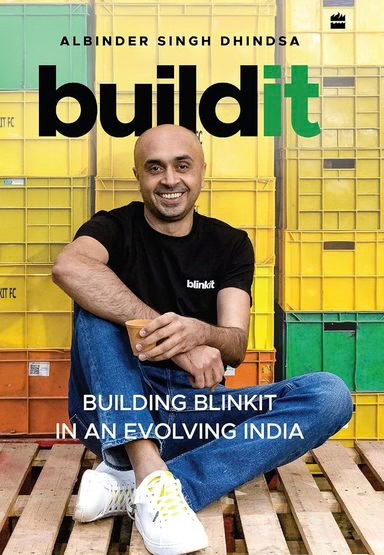
Build It Review: The Story Behind the App That Became Part of Our Everyday Lives
There was a time when waiting two or three days for a delivery felt normal. Today, most of us casually open Blinkit to order groceries, snacks, medicines, stationery, or even random midnight cravings and expect them to arrive within minutes. It has quietly become a part of everyday Indian life. That is exactly what makes Build It such an interesting read. The book is not just about building a startup. It is about understanding how an app that millions now use without thinking was actually built from years of chaos, experiments, failures, strategy, and relentless problem-solving.
Written by Albinder Singh Dhindsa, the book takes readers back to the beginning before Blinkit even existed. From observing Amazon’s delivery systems and Walmart’s pricing strategies in the United States to working around Gurgaon’s early startup ecosystem with names like Deepinder Goyal, the book slowly explains how the idea of hyperlocal delivery evolved into Grofers and eventually Blinkit. What I found most fascinating was that the book never presents the company as a magical overnight success. Instead, it carefully breaks down every operational challenge that came with trying to deliver essentials faster and more efficiently in India.
One of the strongest aspects of the book is how deeply it focuses on the invisible systems behind convenience. As users, we only see the app and the delivery timer. But the book explains the real machinery behind it all. The struggles with delivery partners, handling cash payments, building trust with workers, customer return loopholes, managing warehouses, scaling operations across cities, and eventually building local storage hubs all show how complicated quick commerce actually is. Even small things like warehouse maintenance or delivery inefficiencies became major operational problems at scale. The book constantly reminds readers that convenience is not accidental. It is engineered through thousands of systems working together.
The explanation behind the famous 10-minute delivery model was also one of my favorite parts of the book. Today, instant delivery feels normal to consumers, but the book shows how carefully planned this system actually was. Instead of delivering from warehouses outside cities, the company started creating local storage hubs closer to neighborhoods. This reduced travel time and completely transformed how deliveries worked. The rebranding from Grofers to Blinkit also reflected this shift. The author explains how Indian consumers connect with brands based on the exact problem they solve. Blinkit was no longer just a grocery platform. It became a brand associated with speed, urgency, convenience, and instant solutions.
Another thing I genuinely appreciated was how honest the book feels. Albinder Singh Dhindsa does not glorify entrepreneurship or make startup culture look effortless. He openly discusses losses, investor pressure, failed experiments, funding struggles, operational chaos, and the constant need to rebuild systems. Even when Blinkit eventually became profitable in March 2024, the achievement felt meaningful because readers had already seen the years of uncertainty and pressure behind it. The book feels less like a celebration of success and more like an honest explanation of what it actually takes to build a company that becomes part of millions of people’s daily routines.
Overall, Build It is a fascinating read for anyone interested in startups, branding, business, logistics, or simply understanding how modern convenience works. More than a founder memoir, it feels like a behind-the-scenes look at how one app slowly changed consumer habits across India. After reading this book, you stop seeing Blinkit as just another delivery app. You start seeing the years of systems, decisions, failures, and human effort that made 10-minute delivery possible in the first place.